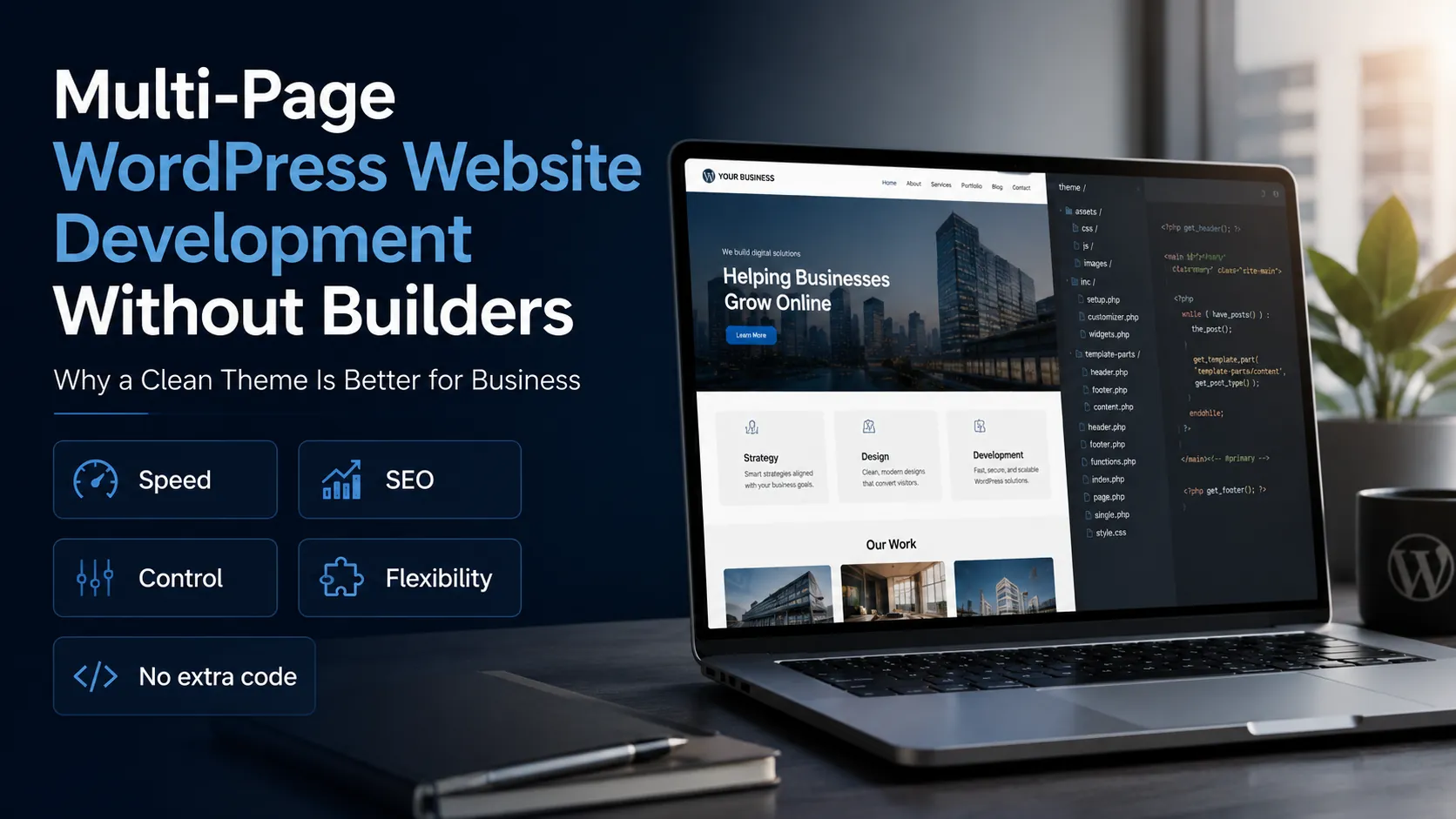
Why Popular Page Builders Like Elementor and Divi Are a Trap for Large Businesses
Elementor, Divi, and other WordPress page builders often seem like the perfect solution for a quick start. They allow you to build pages visually, change sections “on the fly,” and avoid working directly with code.
But when we are talking not about a simple landing page, but about a multi-page WordPress website for business, this apparent convenience can turn into a serious technical limitation. A large number of pages, animations, forms, and language versions gradually makes such a website heavy, slow, and critically difficult to maintain.
Business owners who choose page builders for large-scale projects usually fall into three main traps:

-
Trap #1: Code Bloat.
To display a simple section with text and a button, Elementor or Divi can load dozens of additional styles, scripts, and heavy nested HTML elements. For the browser and Google, this becomes an overloaded structure. That is why websites built with page builders almost always lose to a custom WordPress theme in terms of speed and code cleanliness.
-
Trap #2: Lower Conversions and Slower SEO Growth.
Page loading speed directly affects advertising costs in Google Ads and search rankings. If a corporate website or B2B platform takes longer than two seconds to load, some high-intent potential clients will simply close the tab. In addition, heavy code makes it harder for search engine crawlers to process the website efficiently, which can slow down the promotion of service pages to the top of Google search results.
-
Trap #3: Dependency on Updates.
A business can invest in its website and SEO promotion for years, but one automatic update of a page builder or third-party plugin can suddenly break the responsive layout, lead generation forms, or even the shopping cart functionality.
What Is WordPress Development With a Clean Custom Theme?
WordPress development with a clean custom theme is an approach where the website is not built on a ready-made template or visual page builder like Elementor or Divi. Instead, it is developed from scratch around specific business goals, a unique UI/UX design, and a carefully planned page architecture.
On the outside, users see a modern multi-page website with smooth animations, premium typography, and a perfectly optimized mobile version. But under the hood, there is no “code bloat” or visual clutter — only clean WordPress code and the exact functionality required for your business.
A Simple Admin Panel Without Chaos: How Gutenberg + ACF Works
One of the biggest myths about custom WordPress development is that such websites are difficult to manage. In reality, it is the opposite. Instead of an overloaded page builder interface with hundreds of distracting buttons, we use the native WordPress editor, Gutenberg, together with a professional technology called ACF — Advanced Custom Fields.
For the client, this works like a personalized and intuitive content management system:
-
Structured Custom Fields:
For each type of page — case study, service page, article, or product — we create dedicated fields. Need to update a price, add a headline, or upload an image for a product card? You simply fill in the correct field in the admin panel.
-
Flexible Content Blocks With ACF:
You can build new unique pages using ready-made branded sections, such as testimonial blocks, service blocks, FAQ sections, or lead generation forms. These blocks work like LEGO, but they always keep the correct spacing, proportions, and visual consistency.
-
Protection From Accidental Layout Breaks:
A content manager or marketing specialist cannot accidentally move the grid, break the responsive layout for iPhone, or replace the brand typography with a random default font. The design stays protected, while content editing takes only a few minutes.
Why a Custom WordPress Theme Is an Investment in Stability
When a website is built on a clean foundation with ACF fields, the business becomes independent from heavy third-party visual plugins. If a page needs an FAQ block with Google-friendly structured data or a custom lead generation form, the developer creates exactly that functionality without using bulky “universal” modules.
As a result, the business receives several important advantages:
-
Maximum Loading Speed:
The website is lightweight, renders quickly in the browser, and has a much better chance of reaching the green zone in Google PageSpeed.
-
Scalability Without Limitations:
You can easily add new language versions, expand the website with dozens of categories, connect custom CRM systems, or integrate advanced analytics.
-
Better Security:
Fewer third-party plugins and less unnecessary software in the admin panel means fewer potential vulnerabilities for viruses, spam, and hacker attacks.
Key Benefits of a Custom Multi-Page Website for Business
A custom multi-page WordPress website is not just a set of beautiful pages. It is a carefully designed ecosystem built around the real structure of your company: from service cards and portfolio sections to complex integrations and SEO hubs.
Unlike page builders, the business does not have to adapt to the limitations of a template. Instead, the website architecture fully follows the logic of the company, where every page has a clear marketing role and guides the user toward conversion.
1. Unlimited Scalability Without Rebuilding the Code
Today, your company may only need 10 pages, but in just a few months, you may require new landing pages for paid advertising, additional language versions, a blog, or integration with a CRM system.
Business result:
A clean architecture allows the project to scale smoothly. You get a flexible platform that can be developed for years around new marketing goals, without spending budget on building the website from scratch again.
2. Professional SEO Architecture for Reaching the TOP 10
Instead of relying on a single page that tries to explain everything in a vague way, a custom multi-page website allows you to create separate targeted URLs for each service, specific customer pain point, or geographic search query.
Business result:
A clean HTML structure without the visual clutter of page builders makes it easier for Google crawlers to scan the website. Pages get indexed faster, rank better for long-tail search queries, and help reduce the cost of attracting high-intent B2B traffic.
3. Unique UI/UX Design and Brand Capitalization
Ready-made templates often look typical and cheap. For a serious business, a website must communicate premium value, strengthen trust, and visually differentiate the company from competitors.
Business result:
Custom design of hero sections, clean typography, branded grids, and smooth animations turns the website into the digital face of the brand. This directly affects conversion by turning regular visitors into qualified leads.
4. Absolute Stability and Premium-Grade Security
When a website is overloaded with dozens of third-party plugins required to support Elementor or Divi, the company’s security is put at risk. One automatic module update can cause lead generation forms or the shopping cart to stop working.
Business result:
Development on a clean WordPress theme reduces the number of third-party dependencies to a minimum. Fewer plugins mean fewer potential vulnerabilities for hacker attacks and almost no risk of technical chaos during updates. The website works reliably 24/7.
5. Protected Content Management Interface
A multi-page website requires constant content updates: adding case studies, changing prices, publishing materials, and refreshing service information. Our approach based on Gutenberg and ACF fields gives your team full freedom inside the admin panel.
Business result:
A marketer or content manager works with clearly defined fields and can update texts or images in just a few minutes. At the same time, they physically cannot “break” the layout, change brand fonts, or move the design grid. Content is updated easily, while the premium visual style remains protected.
What Content Management Looks Like Without a Page Builder: Inside the Admin Panel
When a business orders a multi-page website built on a custom WordPress theme, the main concern for marketers is usually: “Will we need to hire a developer every time we want to change a single comma?”
The answer is no. Managing a website without Elementor or Divi can actually become even easier, but it follows a clear business logic. Instead of a chaotic visual editor where hundreds of technical settings distract your team from the actual work, you get a clean and intuitive WordPress admin panel designed specifically around your company’s needs.
The daily content management process comes down to three simple steps.
1. Native Editing Through Structured Fields With ACF
You no longer need to think about how to align a button, what spacing to use between paragraphs, or how to adapt an image for smartphone screens. All styles are already defined in the code by our developers.
How it works in practice:
A content manager opens a service page or case study and sees clear, labeled fields: “Hero Section Title,” “Service Price,” “Upload Client Photo,” “Testimonial Text.”
Marketing benefit:
Content updates become much faster. Changing a price list or publishing a new portfolio project takes just a few minutes, while the risk of accidentally moving the layout grid or breaking the premium design is reduced to zero.
2. Creating New Pages With Custom Gutenberg Blocks
For paid advertising campaigns or new SEO search queries, businesses constantly need new landing pages. Without a page builder, this is handled through a system of branded Gutenberg blocks created individually for your brand identity.
How it works in practice:
You create a new page and simply click: Add “Benefits” block, Add “FAQ” block, Add “Lead Form.” You can reorder and combine these blocks like LEGO, but they will always preserve the correct typography, brand colors, and perfect spacing.
Marketing benefit:
A marketer can independently create and test dozens of targeted landing pages without involving designers or front-end developers, helping the business save production budget and move faster.
3. Integrated SEO Control Without Technical Chaos
Internal optimization of a multi-page service website requires strict structure and consistency. In custom WordPress themes, SEO modules are integrated directly into the page editing interface.
How it works in practice:
Right below the content fields, the SEO specialist gets dedicated blocks for quick editing: Title, Meta Description, H1-H3 heading structure, and automatic FAQ Schema markup generation.
Marketing benefit:
Search engine optimization becomes systematic. No important meta tag is lost or ignored when publishing a new service page, which supports faster indexing and stable growth of long-tail organic traffic in Google.
Summary for B2B Companies
Moving away from page builders is not about limiting freedom. It is about delegating technical routine to clean code. Your website team focuses only on marketing, content, and sales, while the clean WordPress architecture ensures stability, security, and fast loading speed in the green PageSpeed zone
Who Critically Needs a Multi-Page WordPress Website Without Page Builders?
Development on clean custom themes is not a universal solution for everyone. If you need a simple business card website to test a niche or a temporary landing page for two weeks, Elementor or ready-made templates can handle that task quite well.
Custom development without page builders is the choice of a mature business where the website is a key tool for generating revenue and building reputation. There are four categories of companies for which this approach is the only truly correct solution.
1. Companies With High Budgets for Google Ads and Targeted Advertising
When you invest thousands of dollars in paid traffic, every percentage point of conversion and every second of page loading speed turns into real money.
Business pain:
A page built with a visual builder takes more than 4–5 seconds to load. A user clicks on the ad, does not wait for the website to open, and closes the tab. The budget is wasted, while the cost per acquisition increases.
Marketing effect:
Clean WordPress code ensures instant page rendering. The bounce rate decreases, the landing page quality score in Google Ads improves, and this can reduce the cost of each click in an advertising campaign.
2. Large B2B Companies, Manufacturing Businesses, and Logistics Companies
Large businesses need a complex and branched website structure: dozens of service pages, separate hubs for product categories, calculators, user accounts, and integrations.
Business pain:
Trying to build a large corporate website for business on Elementor can turn the website database into chaos. The admin panel starts lagging, plugins conflict with each other, and integration with the internal CRM system constantly breaks.
Marketing effect:
Custom architecture reliably supports any level of page nesting. The website works like a Swiss watch, easily syncs with BAS, ERP, or logistics APIs, and ensures stability for the company’s internal business processes.
3. Premium Brands and Companies With High UI/UX Design Requirements
Real estate companies, residential developers, private medical clinics, architecture studios, automotive businesses, and IT companies all depend heavily on visual presentation. For these niches, the website’s visual quality can represent up to 50% of sales success.
Business pain:
Template-based solutions often look cheap and generic. Attempts to implement complex visual effects — minimalism, clean high-end typography, glassmorphism, or smooth micro-animations — through page builders can completely destroy website speed.
Marketing effect:
Without page builders, the designer is not limited by plugin restrictions. The front-end developer can create a unique, ultra-premium, pixel-perfect interface that matches the design layout exactly, highlights the company’s status, and builds maximum trust with a high-value audience.
4. Projects Focused on Long-Term SEO Growth and Multilingual Expansion
This applies to businesses that plan to scale into international markets, such as Europe or the United States, or aim to dominate organic Google search results in their country.
Business pain:
When 3–4 language versions are added through heavy SEO plugins and visual builders, the crawl speed of the website can drop significantly. Search engine crawlers may struggle to index content updates properly, and pages may start falling out of the index.
Marketing effect:
Development on a clean custom theme is built from the beginning according to strict Google SEO standards. Such websites can scale to thousands of pages without losing speed, giving the business a major advantage over competitors and helping it maintain stable positions in the TOP 10 search results.
Conclusion for the Business Owner
If your business has outgrown the stage of “just testing an idea” and you are ready to build a serious digital asset that will not need to be completely rebuilt in a year, custom WordPress development without page builders is the only logical and economically justified step.
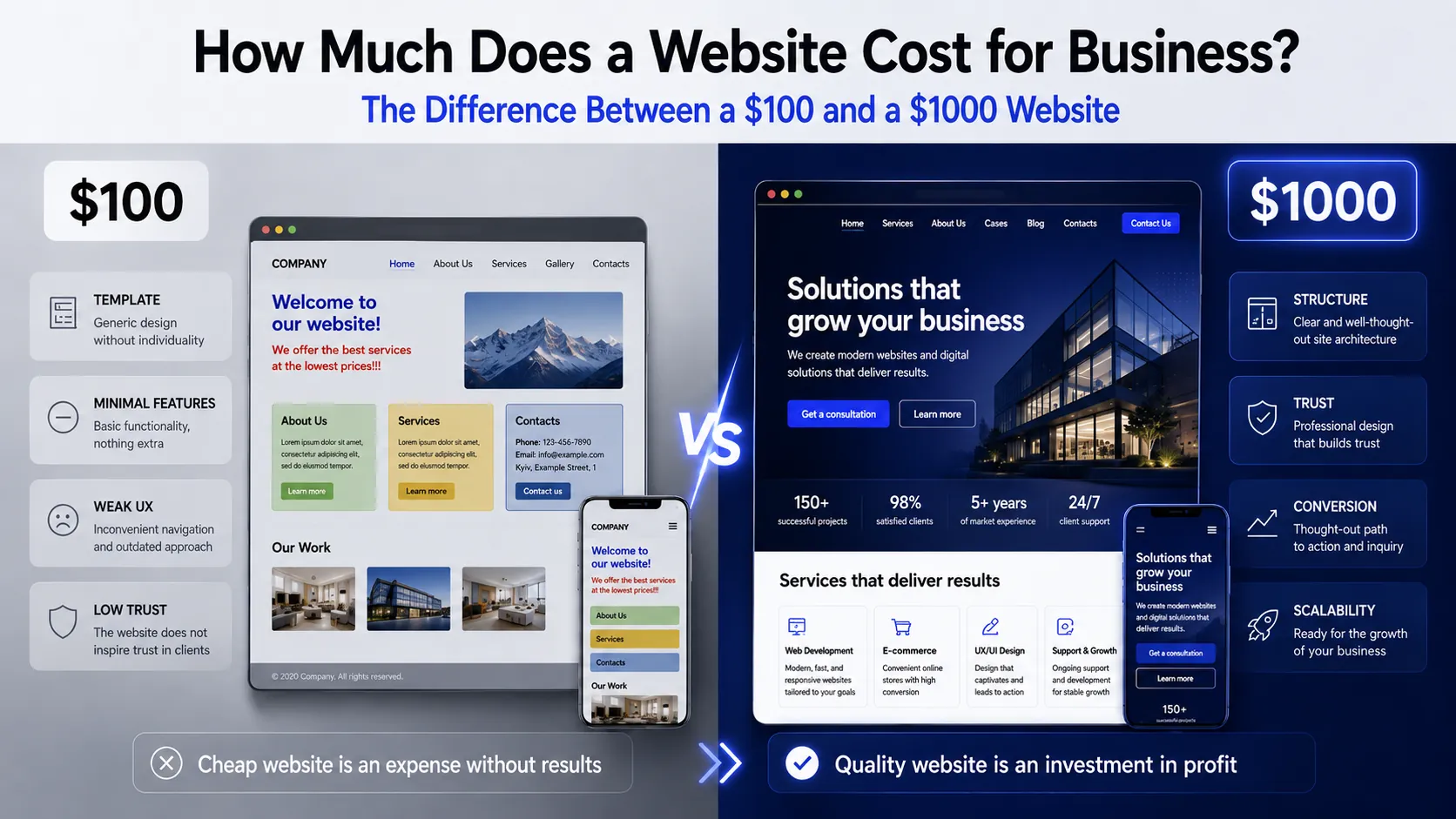
The Economics of a Custom Website: Why a Clean Theme Is Cheaper Than a Page Builder in the Long Run
There is a classic mistake: evaluating a website only by the cost of its development “here and now.” A template-based website or a website built with Elementor can indeed be launched faster and cheaper. However, large businesses often forget about the concept of TCO — Total Cost of Ownership — which means the full cost of owning and maintaining a website over 1–2 years.
In practice, a “cheap” website built with a page builder starts regularly draining money from the company’s budget as early as the third month after launch. Custom WordPress development without page builders works more like an investment: you pay once, and then the website helps you save resources over time.
Let’s compare the hidden costs of page builders and custom code.
Hidden Costs of Visual Page Builders — Elementor / Divi
Ongoing paid support:
Because plugins often conflict with each other, companies have to pay developers every month to restore broken forms, fix layout issues, or repair sections that stop working after another update.Paid licenses:
To give a page builder at least some advanced functionality, businesses often need to purchase PRO versions of multiple plugins: SEO tools, speed optimization plugins, security tools, form builders, and additional widgets. These are recurring yearly subscriptions, often paid in foreign currency.Expensive hosting:
Heavy page builder code creates a higher load on the server. To prevent the website from crashing during advertising campaigns, the business is forced to overpay for more powerful and expensive hosting plans or VPS servers.Overpaying for advertising:
Slow page loading reduces the landing page quality score in Google Ads. As a result, you pay more for each click than competitors whose websites are built with clean code.
Why a Custom WordPress Theme Optimizes the Company’s Budget
No extra costs for third-party plugins:
All essential functionality — ACF blocks, forms, structured data, and custom sections — is already built into the code. You do not need to buy third-party subscriptions that may later be discontinued, restricted, or blocked.Stability without constant “repairs”:
A website built on a clean theme does not break because of regular WordPress updates. You can leave the technical part untouched for months, and everything will continue working as quickly and clearly as on launch day.Savings on server resources:
A lightweight website with clean HTML consumes minimal server resources. It can handle thousands of simultaneous users even on a standard, cost-effective B2B hosting plan.Effective SEO without extra spending:
Google tends to reward fast and well-structured websites with better visibility. You receive free organic traffic from search queries where page builder users are often forced to keep spending monthly budgets on paid advertising.
Marketing Conclusion
Trying to save money on the development of a multi-page website by using page builders is often an illusion. Custom WordPress development without page builders can pay for itself within the first 6–12 months thanks to higher conversion rates, stable performance without bugs, and major savings on monthly technical support.